

The pharyngeal clefts and pouches are grooves on the ectoderm and endoderm respectively that seperate the pharyngeal arches. Some of them develop into structures of the head and neck including glands and tubes.
Derivatives of pharyngeal clefts
On the outside, the 1st cleft forms the external auditory meatus. Since the 2nd overgrows the 3rd and 4th arches, the 2nd, 3rd and 4th clefts become buried and form the cervical sinus which is usually obliterated by birth.
CLINICAL CORNER
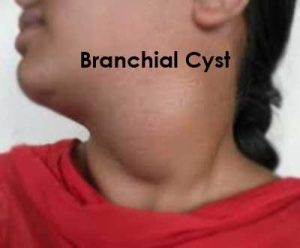
Remnants of the cervical sinus could form cervical (branchial) cysts. Failure of 2nd arch to overgrow the 3rd and 4th arches leads to formation of a branchial fistula that drains the cyst.
Derivatives of pharyngeal pouches
- 1st pouch: primitive tympanic cavity and Eustachian tube
- 2nd pouch: palatine tonsil
- 3rd pouch: thymus, inferior parathyroid glands
- 4th pouch: superior parathyroid glands, the ultimobranchial body (which becomes calcitonin-producing parafollicular cells in the thyroid gland).
CLINICAL CORNER

The thymus, parathyroid glands or ultimobranchial body could leave accessory glands or remnants as they migrate to their final position from the pouches (e.g. in the neck). This can be problematic if they need to be located and removed (e.g. in certain cancers).
 MedMule