
Muscles of the pharynx aid the passage food from the mouth into the oesophagus. Excepting stylopharyngeus which is innervated by the glossopharyngeal nerve (CN IX), the rest are innervated via the pharyngeal plexus by the pharyngeal branch of the vagus nerve (CN X). The muscles are divided into inner and outer layers.
Outer layer
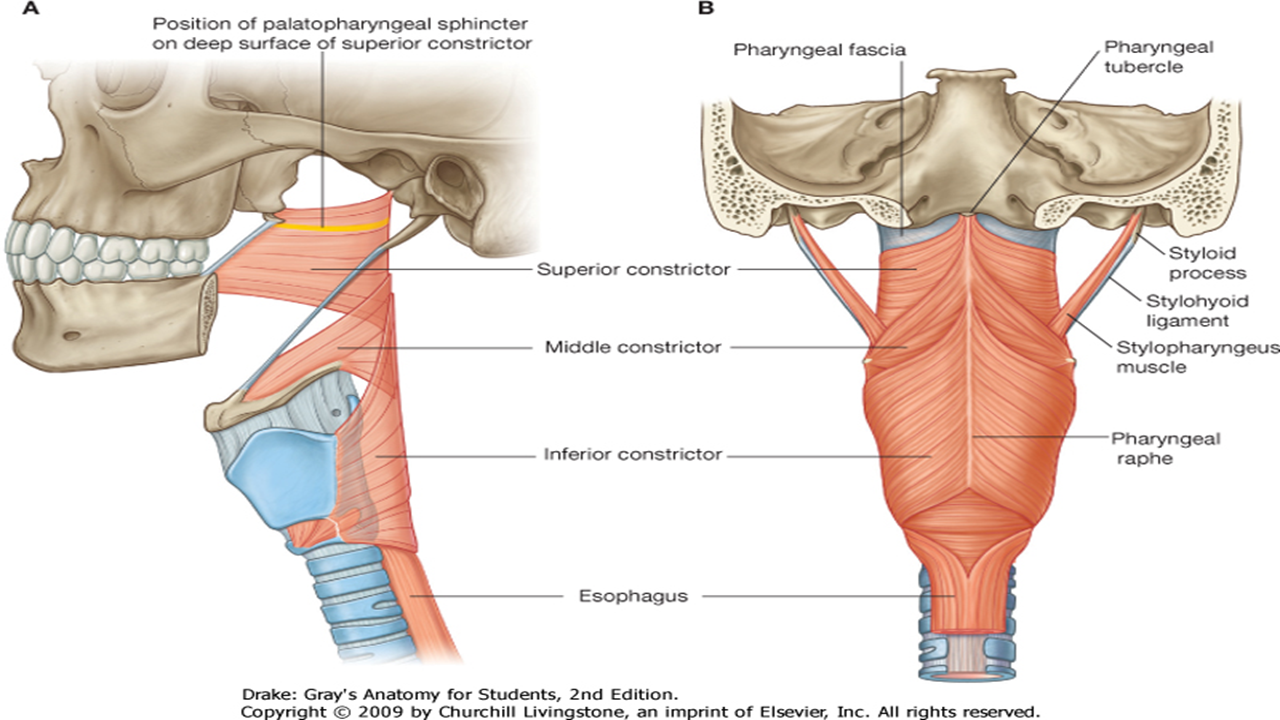
The outer layer comprises three circularly oriented muscles known as the constrictors. They all insert posteriorly at the midline pharyngeal raphé, except for the cricoid fibres of the inferior constrictor (cricopharyngeus) which are sphincteric.
- superior constrictor: arises mainly from the pterygomandibular raphé between the (medial) pterygoid hamulus and mandible.
- middle constrictor: arises from the stylohyoid ligament, plus the greater and lesser horns of the hyoid bone.
- inferior constrictor: arises from the thyroid and cricoid cartilages.
Inner layer
The inner layer pulls the larynx and pharynx upwards in swallowing and comprise of three small long muscles:
- stylopharyngeus: arises from styloid process
- palatopharyngeus: arises from palatine aponeurosis
- salpingopharyngeus: arises from medial end of the cartilaginous auditory tube
 MedMule