
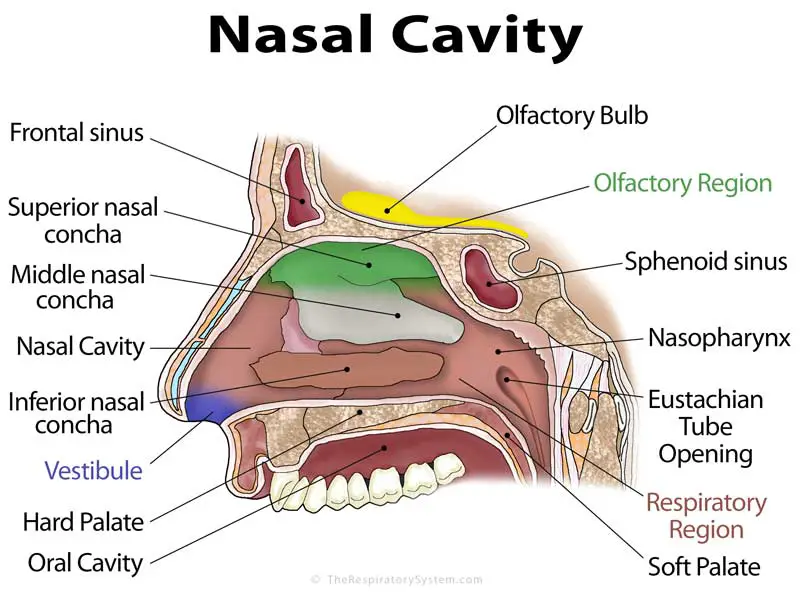
The nasal cavity forms the first part of the airway and is divided into left and right halves by the nasal septum. The most anterior part of the nasal cavity, the vestibule, is lined the same stratified squamous epithelium of the external nose. The rest is ciliated, pseudostratified columnar epithelium, except for the olfactory part (responsible for smell) in the roof and adjacent parts of the medial and lateral walls which consist of columnar epithelium. The cavity roof is arched and bounded superiorly by the cribriform plate through which olfactory nerves pass into cranial cavity. Three conchae are the main features of the lateral walls with the paranasal sinuses generally draining into the recesses known as meatuses beneath each conchae.
CLINICAL CORNER
Cerebrospinal fluid rhinorrhoea refers to drainage of CSF through the nose, likely the result of a skull base fracture involving the cribriform plate. If so, symptoms may include anosmia (loss of smell) due to tearing of the olfactory nerve. A potentslly fatal complication is purulent meningitis.
 MedMule